ADUs and secondary dwellings: the second house on a Nantucket lot
Key facts
- Since February 2, 2025, Massachusetts law makes an ADU under 900 square feet a protected, by-right use on single-family lots statewide, under 760 CMR 71. (Source: Mass.gov, Affordable Homes Act)
- Nantucket's own zoning now defines the protected use ADU directly — no larger than half the principal dwelling's floor area or 900 square feet, whichever is smaller, one to a lot — alongside the secondary dwelling, a second house or garage unit on the same lot. (Source: Nantucket Code § 139-2, as amended May 2026)
- The bylaw's older accessory dwelling and tertiary dwelling definitions were repealed at the May 2026 Town Meeting; the Attorney General approved the amendments on September 8, 2026. (Source: Nantucket Code § 139-2)
- By-right removes the discretionary zoning gate — not HDC design review, Title 5 septic capacity, or covenant restrictions. Those three still decide what gets built.
The island's oldest housing trick
Ask what makes island lots work as hard as they do and the answer is often the second building. The main house holds the owner; the cottage over the garage holds the summer overflow, the year-round tenant, or the caretaker who watches both. That pattern is old here.
What is new is the legal landscape around it — a state law that changed the default answer, and a local bylaw that has kept evolving on its own, most recently at the May 2026 Town Meeting. A buyer weighing a lot, or an owner weighing a project, needs to know which layer applies to what.
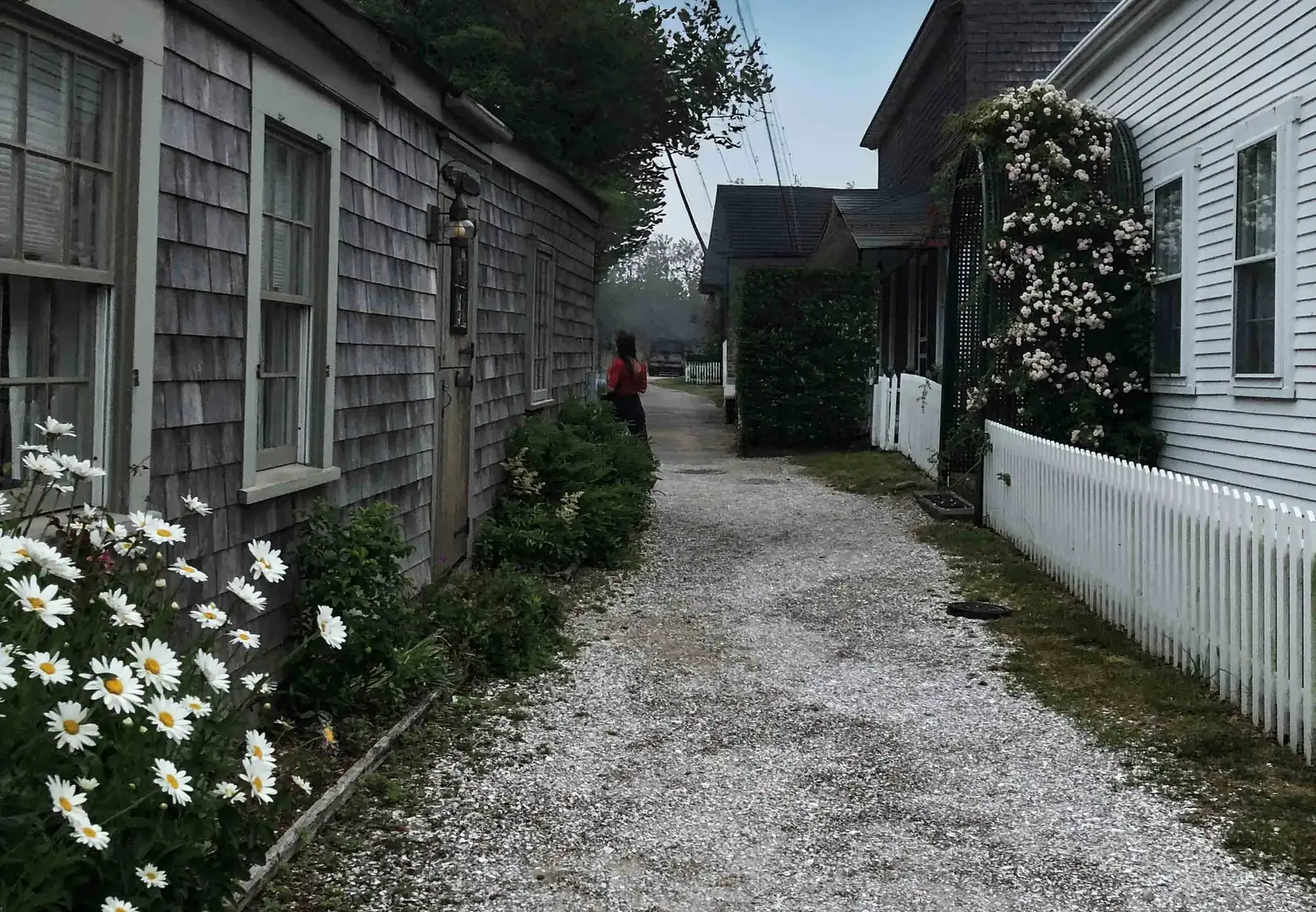
The two forms a second unit takes now
Nantucket's secondary dwelling. The island's distinctive allowance is a second dwelling on the same lot as the primary: a detached house or, since the May 2026 amendments, a unit in an attached or detached garage, that is larger than 900 square feet or otherwise falls outside the protected ADU described next. The bylaw requires the secondary dwelling's ground cover to differ from the primary's by at least 20 percent in either direction and keeps the two at least 10 feet apart; the Planning Board can relieve those standards by special permit. Ownership is tied down: both units are held in the same ownership as an owner-occupied unit on the lot, or owned by a nonprofit, religious or educational entity, or restricted to year-round occupancy, unless one of them is under a Nantucket Housing Needs Covenant or sits on Community Land Trust land. Where it is allowed narrowed in 2026 as well: Article 51 of the May Town Meeting ended the secondary dwelling in several districts, Residential Old Historic among them. As the Use Chart reads in November 2026, it is allowed in R-5, R-10, R-20, R-40 and the three LUG districts, and not in R-1, the Old Historic districts, Village Residential, R-5L, R-10L or SR-20; in those, the protected use ADU is the second unit. In the R-5, R-10 and R-20 districts bedrooms cap at eight per lot, scaled to lot area. What changed in 2026: the bylaw's older accessory dwelling, the in-house unit capped at 800 square feet, and its tertiary dwelling, a third unit of up to 900 square feet, were both repealed. The bylaw now prohibits more than two dwellings on a lot except where the chapter says otherwise, so before buying on a third-unit basis get the current position from Planning and Land Use Services in writing, as our zoning guide also advises.
The state's protected-use ADU. Since February 2, 2025, the Affordable Homes Act makes an accessory dwelling unit under 900 square feet a by-right use on single-family lots statewide, under regulations at 760 CMR 71: no special permit, no discretionary zoning approval. This is the layer that changed the default. Where the local bylaw was silent or stricter, state law now guarantees the baseline. Nantucket's bylaw now carries the same unit under its own definition, the protected use ADU: attached or detached, no larger than half the principal dwelling's gross floor area or 900 square feet, whichever is smaller, in the same ownership as the principal dwelling, one to a lot, and allowed on the Use Chart in every residential district.
What by-right does and does not mean here
By-right removes the discretionary zoning gate. It does not remove Nantucket's other gates — and on this island the other gates are real. The Historic District Commission reviews the exterior of what you build, island-wide, exactly as it does for any structure; a by-right ADU still needs its Certificate of Appropriateness before a building permit issues.
Septic is the second gate: an added dwelling unit adds bedrooms, and on a lot served by Title 5 septic rather than town sewer, bedroom count is what sizes the system — the state issued specific guidance on Title 5 compliance for ADUs in 2025. Covenant lots carry a third: subdivision covenants can restrict second dwellings regardless of what zoning allows, and on a covenant lot the covenant wins. Wastewater capacity, covenants, HDC — the project that clears all three is the one that gets built.
Why the second dwelling matters in the island's math
For a buyer, a lot that can hold a second dwelling is a different asset than one that cannot — flexibility for guests, quarters for staff or trades, or rental income that carries the property. We wrote separately about what island homes actually rent for, and about how second units fit the island's short-term-rental rules. For the island itself, the stakes are housing: every legal second unit is one more place to live on an island that needs them. And for a seller, a documented, permitted second unit is value worth stating plainly when the house goes to market.
One caution cuts the other way: an existing second unit is only an asset if it is legal. Part of diligence on any two-dwelling property is confirming that both units stand on permits, not on history and hope.
How to find out what your lot allows
The sequence is short: the zoning district sets the baseline — our zoning guide and the district pages on this site cover the ground; the bylaw's use chart says what that district permits; the covenants, if the lot has them, can subtract from it; the state ADU layer guarantees its own floor regardless; and then Title 5 capacity and the HDC shape what the permitted thing can physically be.
We run this sequence for buyers before offers, because “can it hold a cottage” changes what a lot is worth — in both directions. Weighing a lot, or a house whose second unit is doing a lot of work in the listing copy? Ask us to run the layers before you write anything.